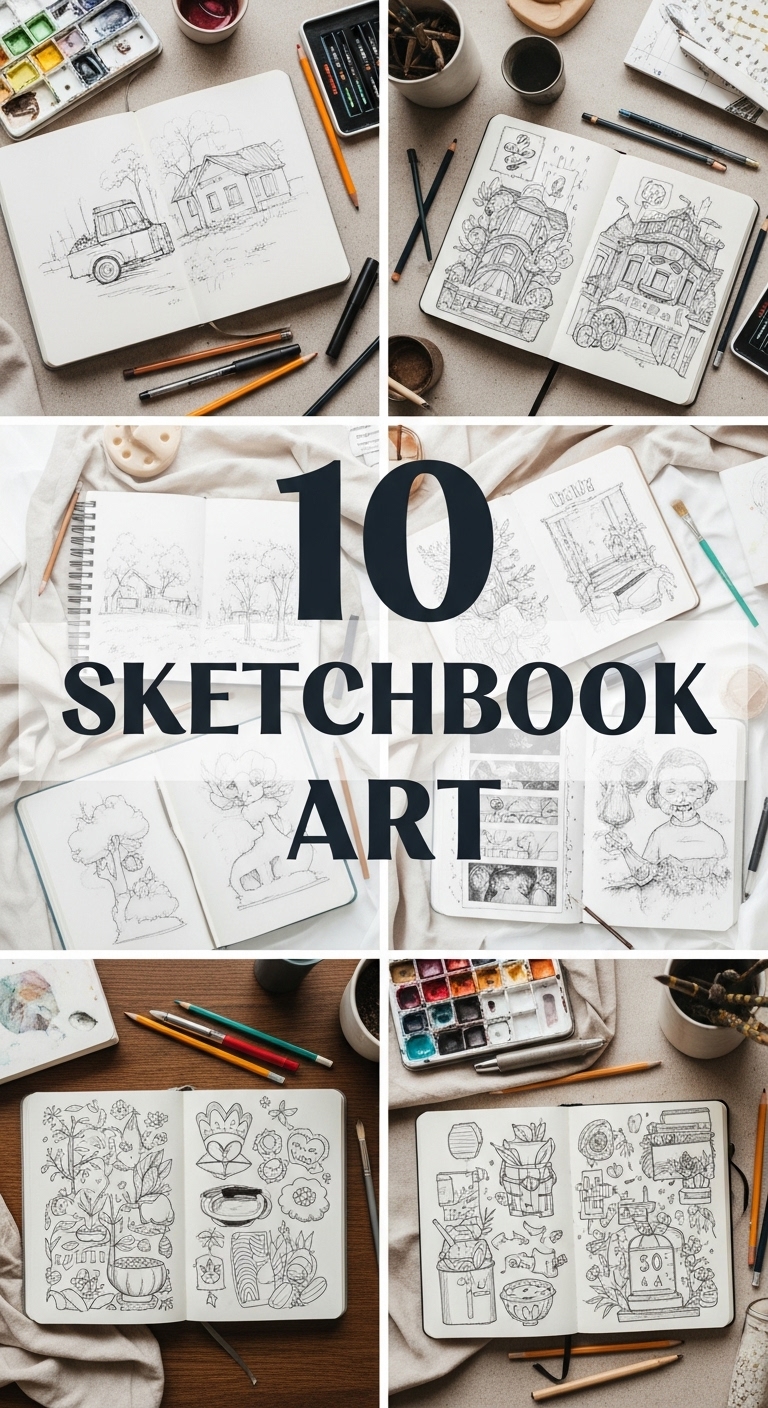
Keeping a sketchbook is one of the most personal and rewarding habits for any artist. Whether you are a beginner just learning to draw or an experienced creative looking for inspiration, your sketchbook is your visual diary, your creative playground, and your space to experiment without fear of mistakes. The pages can hold unfinished ideas, detailed drawings, or simple marks that tell stories only you understand. In this blog post, we will explore 10 inspiring sketchbook art ideas that you can try to fill your pages with creativity, depth, and meaning. Each idea encourages you to develop your artistic voice and transform blank pages into visual treasures.

1. Nature-Inspired Sketches
Nature is one of the most accessible and timeless subjects for sketchbook art. Trees, leaves, flowers, stones, shells, and landscapes offer endless possibilities for exploration. You can practice sketching from observation by going outside or drawing from reference photos. Focus on capturing the textures, patterns, and details that make each element unique.
Start with simple contour sketches of leaves and branches. Experiment with shading techniques such as hatching, stippling, and blending to create depth. You can also create botanical studies by labeling plant species or noting where you found them. Try sketching seasonal changes too—winter branches, spring blossoms, summer greenery, and autumn foliage.
For a more creative touch, blend realism with imagination. Draw plants turning into geometric shapes, or let roots and vines morph into abstract forms. Nature sketches can teach you patience, observation, and balance—skills that will reflect in all your artwork.

2. Daily Life Illustrations
Sketching moments from your daily life adds a documentary quality to your art journal. This can include people at a café, your workspace, a morning cup of tea, or even the view from your window. The goal is not perfection but storytelling through sketches.
Use quick line drawings to capture motion and mood. For instance, sketch your pet sleeping, people walking in the park, or your kitchen counter as it looks right now. These sketches freeze fleeting moments and help you build confidence in drawing what you see.
To make your sketchbook pages more engaging, combine your sketches with handwritten notes, snippets of thoughts, or short descriptions of your day. This approach transforms your sketchbook into a visual diary, filled with emotion and authenticity. Over time, these sketches become cherished memories you can look back on.

3. Portrait Studies
Portrait sketching is a powerful way to develop your observation and shading skills. You can draw family members, friends, or even strangers from photos. Begin with basic shapes to structure the face and gradually refine details like eyes, lips, and hair. Focus on capturing expressions rather than perfection.
To make portrait sketches more creative, experiment with different mediums—graphite, ink, charcoal, or colored pencils. Play with lighting by shading one side of the face while keeping the other illuminated. You can also stylize portraits, exaggerating certain features or using minimalistic lines to express personality.
Try a challenge: draw one portrait a day for a week. You will quickly notice improvement in your proportions, shading, and confidence. Portrait studies also help you develop patience and a deeper appreciation for human diversity and emotion.

4. Abstract and Geometric Art
If you ever feel stuck or intimidated by realistic drawing, abstract sketching offers a freeing experience. You can use lines, shapes, and colors to express mood, rhythm, and balance without following strict rules. Start with simple patterns like circles, triangles, and waves, and let them evolve across the page.
Experiment with contrast—thick and thin lines, dark and light shading, or dense and open areas. This creates visual interest and harmony. Some artists also find it relaxing to create repetitive geometric patterns, mandalas, or optical illusions.
Abstract art allows you to explore your emotions visually. For instance, you can represent calmness with flowing lines or express chaos with overlapping shapes. Over time, you might develop a personal abstract style that reflects your inner thoughts and moods.

5. Still Life Compositions
Still life drawing is an essential exercise for artists because it teaches observation, composition, and lighting. You can create a still life setup using everyday objects such as books, fruits, cups, and flowers. Arrange them in an interesting composition, paying attention to how light and shadows interact.
Begin with pencil outlines, then slowly add shading or ink. Try to capture textures—smooth ceramics, rough fabric, shiny metal. Use your sketchbook to experiment with different perspectives, such as drawing from above or at an angle.
Still life studies improve your control and ability to see proportions accurately. They also encourage mindfulness as you slow down to truly observe the world around you. Once you are comfortable with realism, you can interpret still lifes more creatively by playing with scale, color, or surreal combinations of objects.

6. Travel and Urban Sketching
If you love exploring new places, a sketchbook can be your perfect travel companion. Instead of relying on photos, sketch your surroundings on location. This could be a street corner, a market, a monument, or a quiet café.
Urban sketching focuses on capturing scenes as they are, often with quick pen or watercolor work. It is about feeling the environment and translating that energy onto paper. You can mix sketches with written notes, stamps, or tickets collected during your trip.
Travel sketches carry emotion and authenticity because they represent how you experienced a place rather than how it looked in a photo. Even if you cannot travel far, explore your local neighborhood or a nearby park—every place has something worth drawing.

7. Fantasy and Imaginative Art
Let your creativity run wild by filling your sketchbook with fantasy worlds, mythical creatures, or dream-inspired art. This kind of sketching allows you to build stories and experiment with visual storytelling.
Create characters with unique features, landscapes from another world, or hybrid animals. You can use references from mythology, literature, or your own imagination. The key is to let go of realism and focus on concept and mood.
Fantasy sketching also helps improve design thinking. As you invent creatures or settings, you practice combining anatomy, composition, and symbolism. If you enjoy writing stories, your sketchbook can serve as a visual extension of your narrative ideas.

8. Mixed Media Experiments
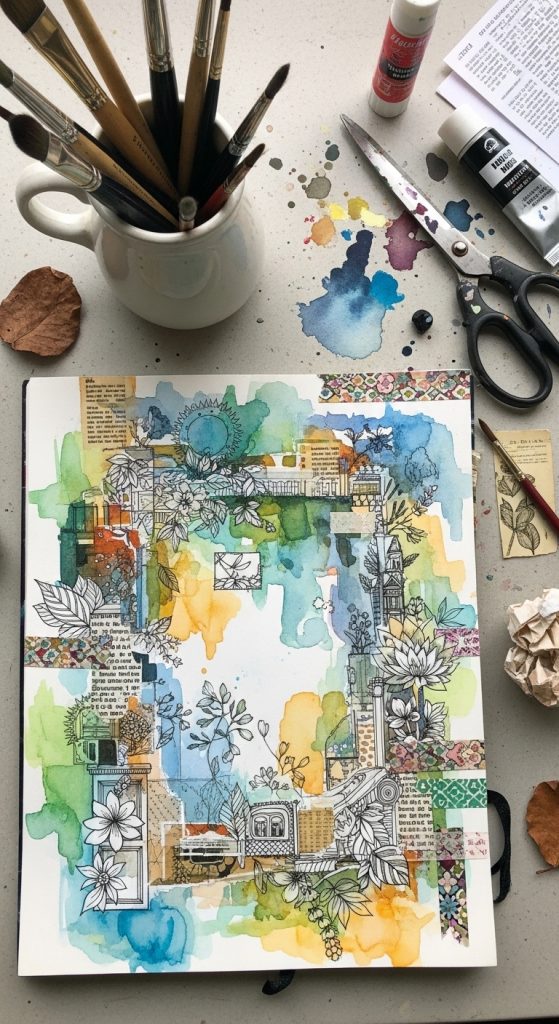
Your sketchbook does not have to be limited to pencil and paper. Experimenting with different materials can open new creative possibilities. Combine graphite with ink, watercolors with collage, or colored pencils with markers.
Layer textures by gluing scraps of paper, fabric, or newspaper clippings onto your pages. You can also use coffee or tea stains for an aged effect. The goal is to play with contrast and layering to create depth and intrigue.
Mixed media sketchbooks often look dynamic and unpredictable. They allow you to express spontaneity and embrace imperfection. Every experiment adds new dimension to your artistic process and helps you discover what materials resonate most with your style.
9. Concept and Idea Development
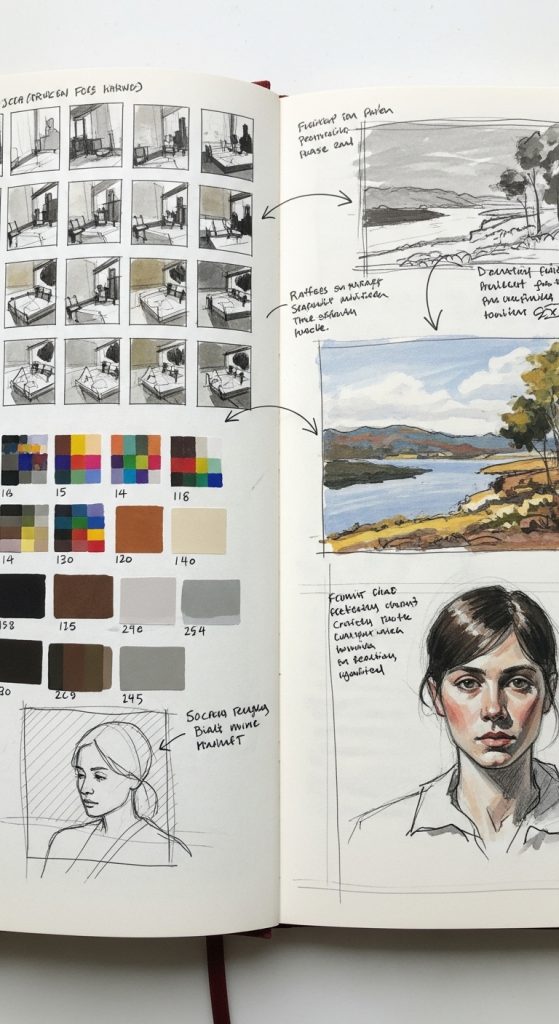
A sketchbook can also function as a creative laboratory where you develop ideas for larger projects. If you are a painter, designer, or illustrator, use your sketchbook to brainstorm and refine concepts before final execution.
Draw thumbnails, color studies, and quick mockups. Jot down thoughts, notes, and inspirations beside your sketches. This helps you think visually and organize your creative process.
For example, if you plan to create a painting, sketch several versions with different compositions or color palettes. Seeing your ideas evolve on paper makes it easier to choose the best direction. Many professional artists use sketchbooks as creative blueprints for their major works.
10. Art Inspired by Emotions
Art can be a powerful emotional outlet. Use your sketchbook to express feelings—joy, sadness, anger, calm, excitement—through colors, shapes, and textures. You do not need to draw recognizable subjects; simply let your hand move freely as you translate emotions into visual form.
Try color psychology—using warm tones for energy, cool tones for peace, or muted tones for reflection. Combine abstract forms, expressive lines, and layered marks to capture complex moods.
This form of art is deeply personal and healing. Over time, your sketchbook becomes a visual record of your emotional journey, helping you process thoughts and experiences creatively.

Tips for Maintaining a Consistent Sketchbook Practice
- Set aside regular time – even 10 minutes a day helps keep your creativity flowing.
- Keep your tools ready – pencils, pens, erasers, and a portable sketchbook make it easier to draw anywhere.
- Don’t fear mistakes – sketchbooks are for exploration, not perfection.
- Experiment freely – try new materials, techniques, and styles without self-judgment.
- Date your pages – this helps track your growth over time.
- Mix text and art – adding thoughts or quotes enhances storytelling.
- Find inspiration everywhere – from architecture to shadows, textures, or dreams.
A sketchbook is your creative space. It does not need to be shared or displayed; it simply needs to exist as your visual sanctuary. Every page you fill strengthens your artistic confidence and helps you see the world in a more detailed, imaginative way.
Conclusion
Your sketchbook is a mirror of your artistic journey. It reflects your growth, curiosity, and courage to create. Whether you prefer delicate pencil studies, bold abstract patterns, or emotional color splashes, every page holds a piece of your story.
The best part about sketchbook art is that there are no rules. You can draw from observation, imagination, or emotion—whatever feels authentic to you. Over time, your sketchbook becomes more than just a collection of drawings; it becomes a reflection of who you are as an artist.
Keep experimenting, keep observing, and most importantly, keep sketching. Every line, shape, and mark you make adds to the beautiful tapestry of your creative evolution.
Author

admin@weltpromi.de
Related Posts

10 Luxury Bedroom Master Antique
Creating a luxurious master bedroom is all about blending comfort, elegance, and timeless design. When you add antique elements into the mix,...
Read out all
10 Luxury Master Bedroom Attic
Turning an attic into a luxurious master bedroom is an excellent way to maximize your home’s potential. Attics often come with unique...
Read out all
10 Luxury Bedroom Master Aesthetic
Creating a luxurious master bedroom is about more than just choosing expensive furniture. It is about crafting a space that embodies comfort,...
Read out all
10 Bedroom Bed Designs
Your bedroom is more than just a place to sleep—it’s a sanctuary, a personal retreat where style and comfort meet. Central to...
Read out all
10 Beige Bedroom Ideas
When it comes to bedroom design, beige is a timeless and versatile color that exudes warmth, sophistication, and calm. Unlike brighter colors...
Read out all
10 Cool Bedroom Ideas
Your bedroom is more than just a place to sleep. It is your sanctuary, your personal retreat, and a reflection of your...
Read out all