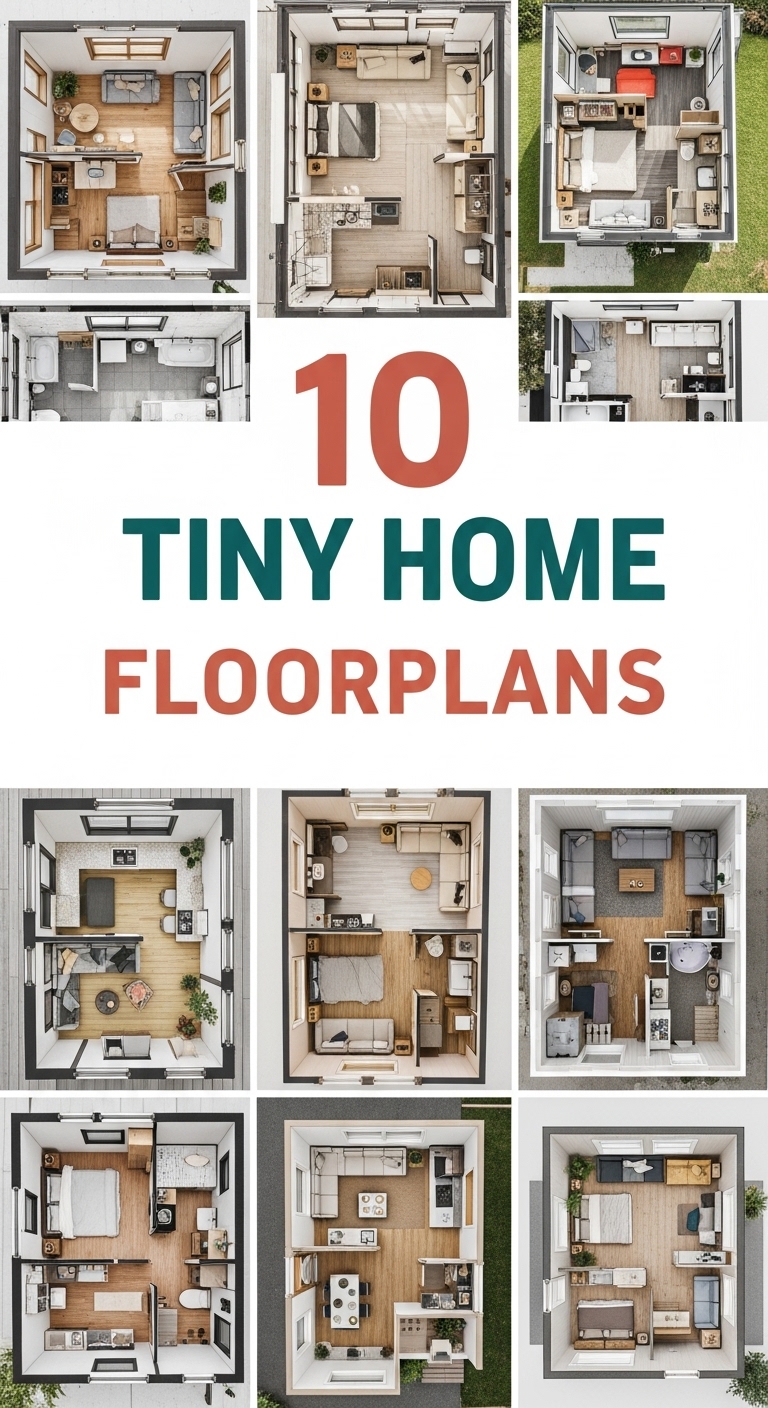
Tiny homes have captured the imagination of people everywhere who want to live simply, affordably, and beautifully. The right floorplan can make a tiny home feel surprisingly spacious, functional, and inviting. Whether you are downsizing, embracing a minimalist lifestyle, or seeking an affordable housing solution, having a well-designed floorplan is the key to comfort and efficiency.
In this post, we will explore 10 creative tiny home floorplans that prove you do not need a large footprint to live large. Each design maximizes space, combines smart storage ideas, and enhances natural light to make every square foot count.
1. The Open Studio Plan
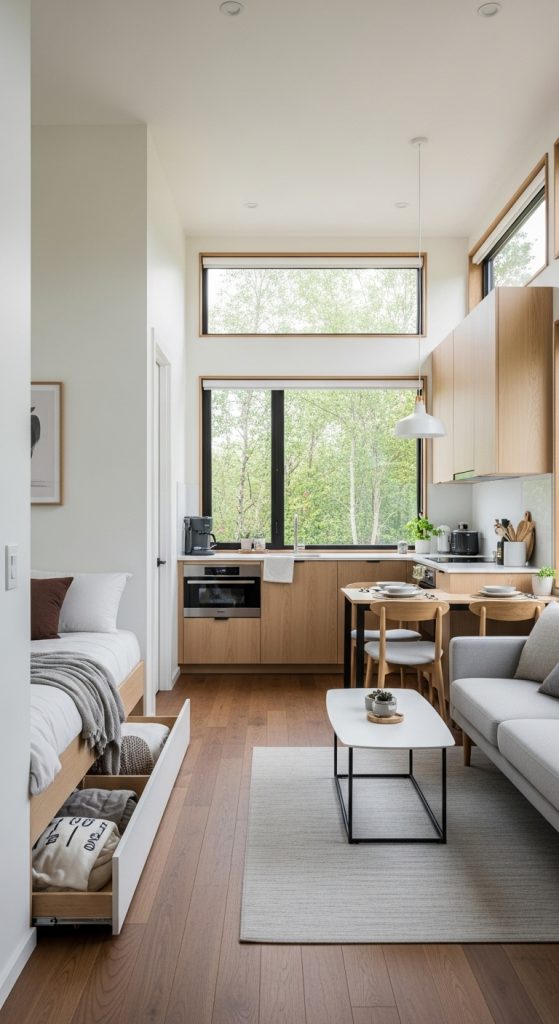
The open studio layout is one of the most popular designs for tiny homes because of its simplicity and flexibility. This plan eliminates unnecessary walls and creates a unified space that serves multiple purposes.
Key Features:
- A single open space combining living, sleeping, and dining areas
- Compact kitchenette against one wall
- Hidden storage under the bed or seating
- Large windows for natural light
This floorplan works best for individuals or couples who prefer an open concept with minimal partitions. You can easily rearrange furniture or use modular pieces to change the space as needed.
Design Tip: Use a Murphy bed or convertible sofa to free up space during the day, making your home feel twice as big.
2. The Loft-Style Tiny Home
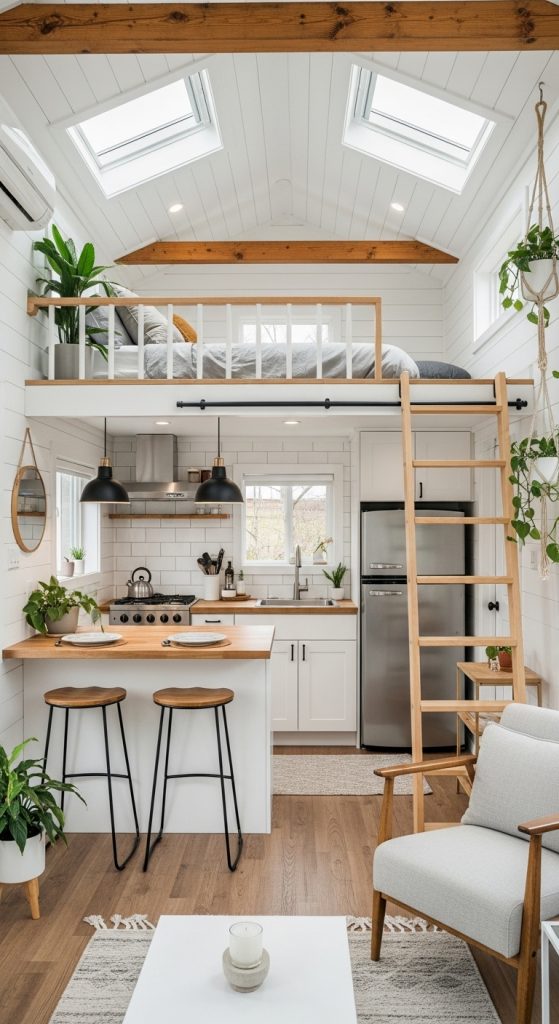
A loft-style plan adds vertical dimension to your small home. By elevating the sleeping area, you create additional floor space for a kitchen, bathroom, and living area below.
Key Features:
- Elevated loft bedroom accessible by stairs or ladder
- Full kitchen beneath the loft
- Small but efficient bathroom tucked under the stairs
- Open living area with high ceilings
Lofts are ideal for those who do not mind climbing up to sleep and love the feeling of height in their home. The vertical layout gives a sense of openness even in a limited footprint.
Design Tip: Add skylights or clerestory windows above the loft to make the area airy and bright.
3. The L-Shaped Floorplan
The L-shaped layout is a clever design that visually separates living areas without needing interior walls. One wing typically houses the kitchen and bathroom, while the other provides space for lounging or sleeping.
Key Features:
- Two connected zones forming an L shape
- Natural zoning between private and social spaces
- Easy access to outdoor decks or patios
- Windows placed at angles for balanced light
This design is excellent for tiny homes built on foundations or larger trailers. It provides the feeling of multiple rooms while maintaining a compact footprint.
Design Tip: Extend the shorter side of the L outward as a deck to create a seamless indoor-outdoor flow.
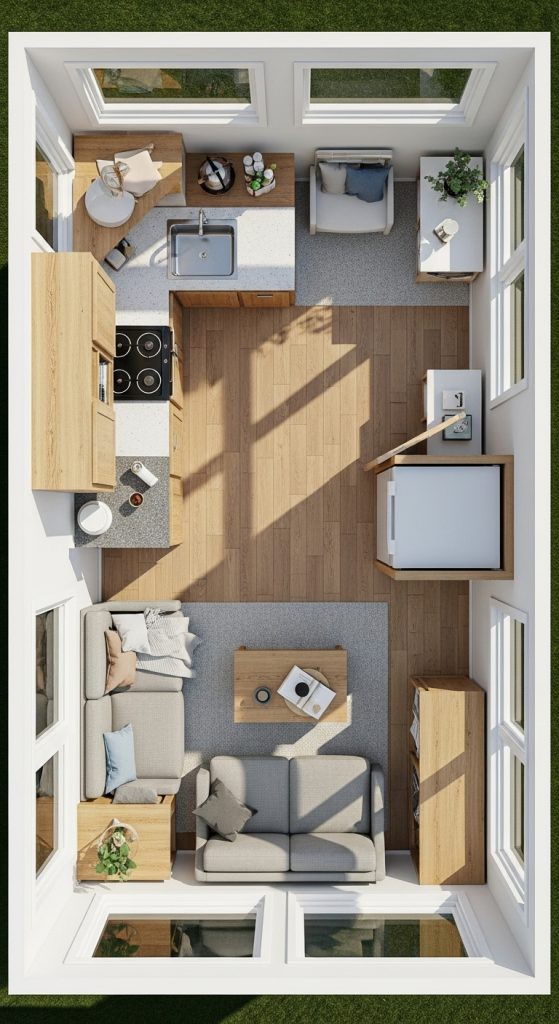
4. The Dual Loft Family Layout
For families or roommates, a dual loft design offers separate sleeping areas while keeping the main living space open.
Key Features:
- Two lofts on opposite ends connected by a central living space
- Kitchen and bathroom located beneath one loft
- Flexible main floor with seating and dining options
- Ample storage built into stairs and loft platforms
This plan balances privacy and togetherness, making it great for small families or guests. The symmetrical layout also looks aesthetically balanced from the exterior.
Design Tip: Choose open railings or glass barriers for loft edges to maintain an open, connected feel.
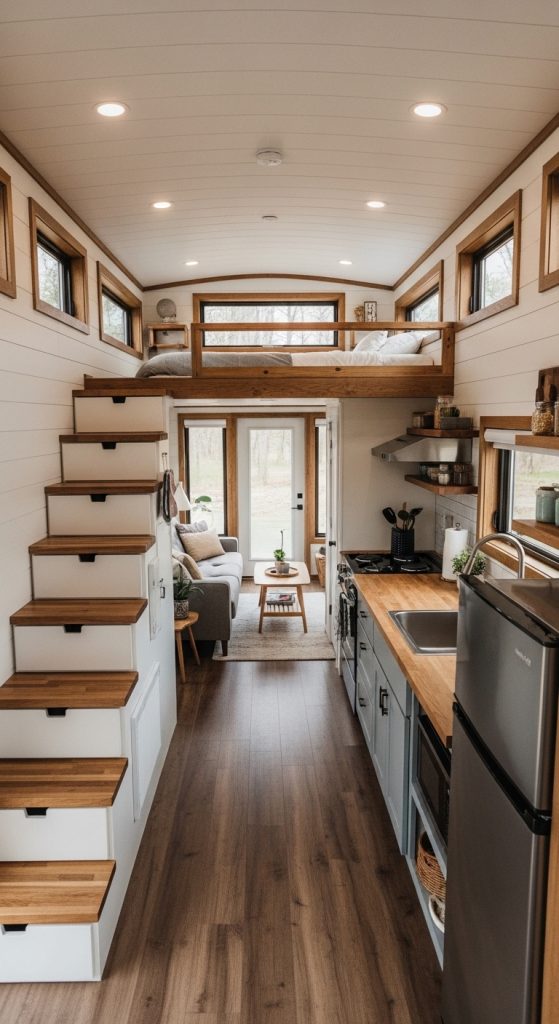
5. The U-Shaped Kitchen Layout
A U-shaped kitchen plan in a tiny home maximizes counter space while keeping everything within reach. This design is particularly popular among those who love cooking but have limited square footage.
Key Features:
- U-shaped kitchen at one end of the home
- Central living and dining space
- Loft bedroom above or rear sleeping nook
- Smart vertical storage in kitchen cabinetry
The U-shaped design ensures that no space goes unused and keeps the workflow efficient. It also provides extra storage and defines the kitchen area without needing partitions.
Design Tip: Add open shelving on upper walls to make the kitchen feel lighter and more spacious.
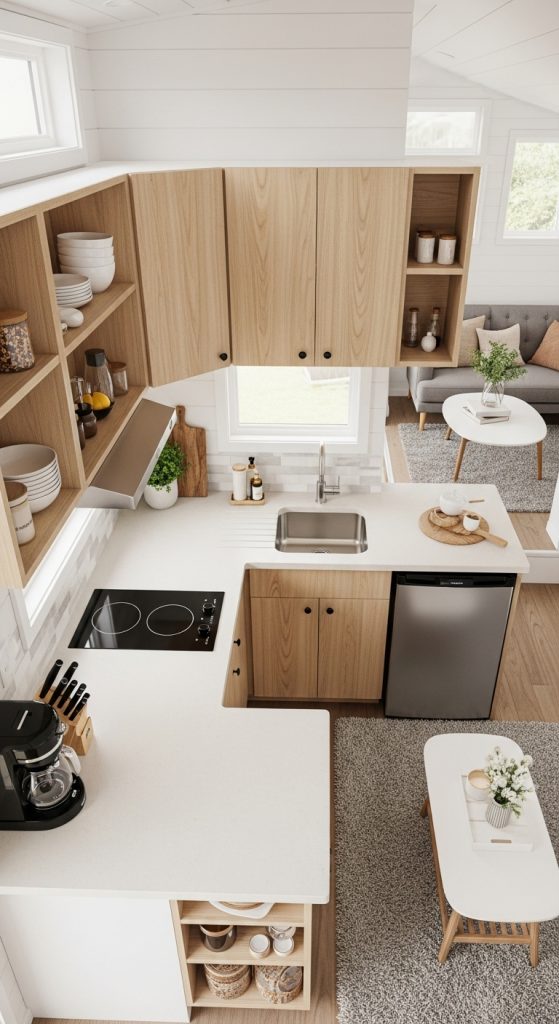
6. The Side Entry Floorplan
Most tiny homes have a central front entry, but the side entry layout changes the flow dramatically. By moving the entrance to the side, you open up possibilities for more usable wall space and a better furniture arrangement.
Key Features:
- Door located along the side wall instead of at the end
- Allows for a larger living area or full-size couch
- Kitchen and bathroom placed at opposite ends
- Optional loft bedroom or main floor sleeping nook
This layout feels more like a traditional home and offers a great division between zones. It also allows for beautiful panoramic windows along the front and back.
Design Tip: Pair the side entry with a small covered porch to create a welcoming outdoor extension.
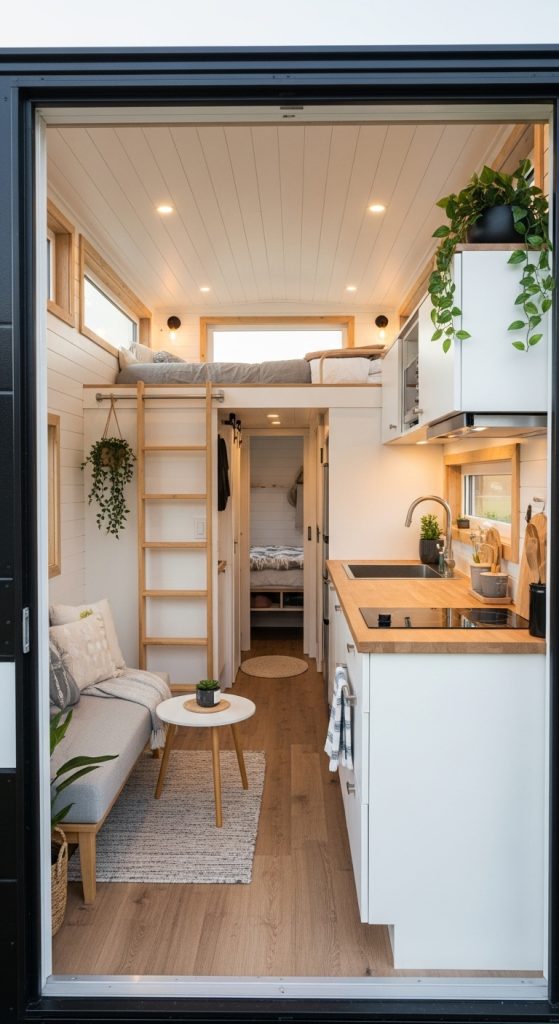
7. The Split-Level Floorplan
A split-level tiny home uses slight changes in elevation to define spaces without walls. This layout feels dynamic and modern while maintaining an open concept.
Key Features:
- Raised platform for the bedroom or seating area
- Built-in storage beneath platforms
- Compact kitchen and bathroom on lower level
- Open layout with minimal partitions
The layered layout creates visual separation between areas, making the home feel more spacious and sophisticated.
Design Tip: Use steps or raised floors for storage drawers or hidden compartments. Every inch can serve a dual purpose.
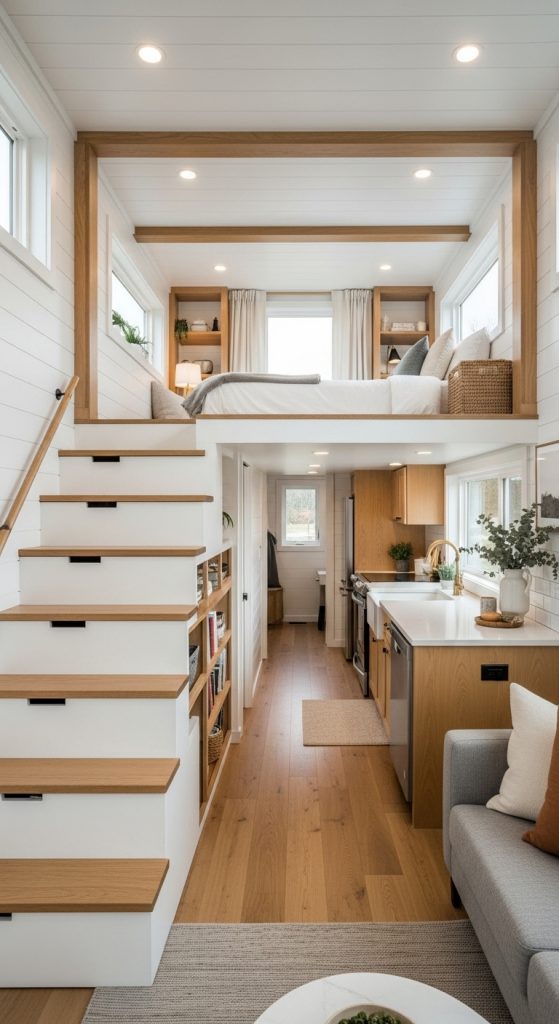
8. The Extended Bump-Out Plan
This plan includes small bump-outs or extensions that slightly expand key areas like the dining nook, bathroom, or bedroom. It is perfect for those who want a little extra comfort without increasing the trailer size significantly.
Key Features:
- Small extensions on one or more sides
- Dedicated zones for dining or reading
- Efficient kitchen and bathroom placement
- Optional loft for sleeping or storage
Bump-outs give flexibility in design, allowing you to customize areas that matter most to your lifestyle.
Design Tip: Use glass bump-outs or corner windows to add depth and natural light to the home’s design.
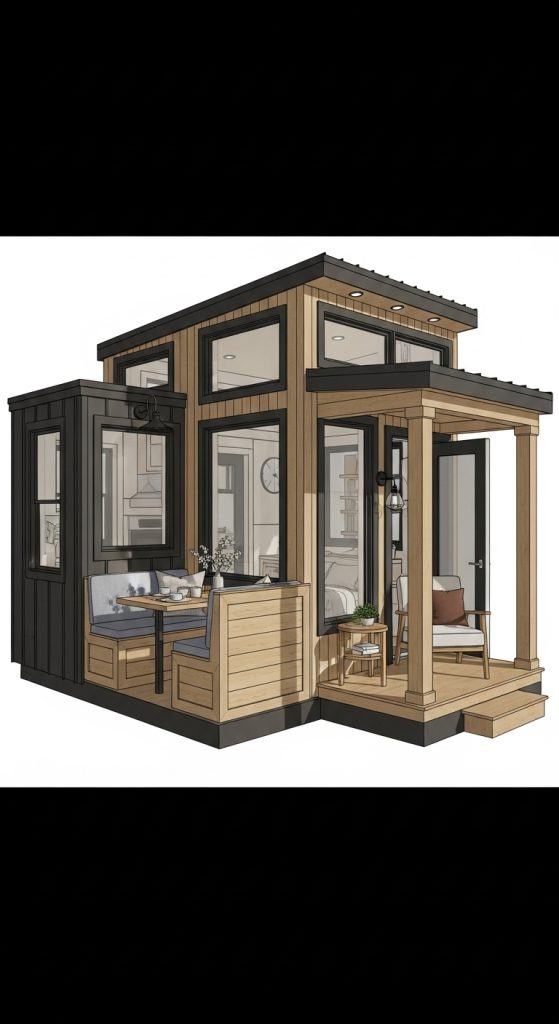
9. The Compact Cottage Layout
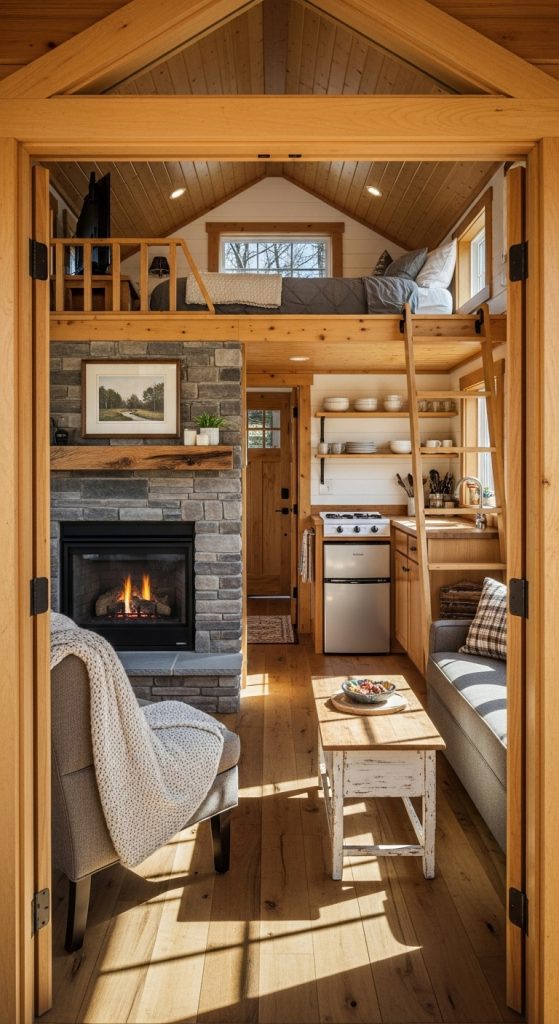
This plan focuses on creating a homey, cottage-like feel within a tiny footprint. It often features a gabled roof, front porch, and cozy interior layout.
Key Features:
- Living area at the front with large windows
- Central kitchen and bathroom
- Loft or rear bedroom with privacy
- Warm materials like wood and soft lighting
This plan works beautifully for anyone who loves charm and coziness. The design feels like a small retreat or vacation cabin, perfect for year-round living or weekend getaways.
Design Tip: Add shiplap walls and light-toned wood finishes to enhance the cottage aesthetic.
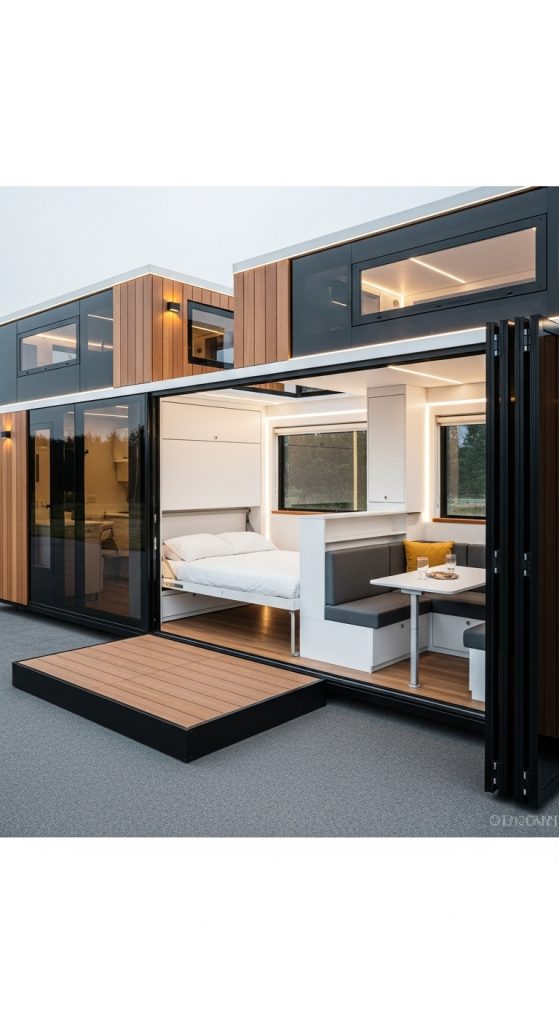
10. The Modular Expandable Floorplan
For ultimate flexibility, a modular or expandable design allows sections of your home to move, fold, or expand when needed.
Key Features:
- Slide-out or foldable wall sections
- Convertible furniture that transforms for multiple uses
- Hidden storage and movable partitions
- Efficient energy and material use
This plan is ideal for travelers or those who want a home that can adapt to different locations or life stages. It combines innovation with minimalism in a way that modernizes tiny living.
Design Tip: Consider lightweight materials like aluminum and composite panels to make expansion easier and maintain durability.
How to Choose the Right Tiny Home Floorplan
Choosing the perfect floorplan depends on your lifestyle, preferences, and long-term goals. Here are a few key considerations before finalizing your layout:
1. Determine Your Needs:
Start by listing what is essential to you. Do you need a full kitchen, a workspace, or extra storage? Your priorities will shape your layout.
2. Consider Mobility:
If your home will be on wheels, keep the weight and balance in mind. Fixed foundation designs allow for heavier materials and wider floorplans.
3. Maximize Vertical Space:
In tiny homes, height is your best friend. Use lofts, shelving, and storage walls to keep the floor open.
4. Use Light Wisely:
Large windows, skylights, and glass doors can make even the smallest layout feel airy and bright.
5. Plan for Multipurpose Areas:
A dining area can also be a workspace, and a couch can become a bed. Versatile designs make tiny homes livable long-term.
6. Think Ahead:
Plan for how your needs might change over time. A flexible floorplan allows you to adapt without a major remodel.
Final Thoughts
Tiny home living is not just about saving space; it is about redefining how we use it. The best floorplans combine functionality with beauty, making everyday living efficient and enjoyable. Whether you love open studios, cozy cottages, or modern modular designs, the right layout will make your small home feel just right.
Each of these 10 floorplans offers a unique approach to compact living, blending creativity with comfort. With thoughtful design, your tiny home can become a reflection of your values and lifestyle — proving that less space can indeed mean more freedom.
Author

admin@weltpromi.de
Related Posts
10 Luxury Bedroom Master Antique
Creating a luxurious master bedroom is all about blending comfort, elegance, and timeless design. When you add antique elements into the mix,...
Read out all
10 Luxury Master Bedroom Attic
Turning an attic into a luxurious master bedroom is an excellent way to maximize your home’s potential. Attics often come with unique...
Read out all
10 Luxury Bedroom Master Aesthetic
Creating a luxurious master bedroom is about more than just choosing expensive furniture. It is about crafting a space that embodies comfort,...
Read out all
10 Bedroom Bed Designs
Your bedroom is more than just a place to sleep—it’s a sanctuary, a personal retreat where style and comfort meet. Central to...
Read out all
10 Beige Bedroom Ideas
When it comes to bedroom design, beige is a timeless and versatile color that exudes warmth, sophistication, and calm. Unlike brighter colors...
Read out all
10 Cool Bedroom Ideas
Your bedroom is more than just a place to sleep. It is your sanctuary, your personal retreat, and a reflection of your...
Read out all