Living in a tiny house does not mean compromising on style, comfort, or functionality. With the right design strategies, a small space can feel spacious, organized, and inviting. Tiny homes are gaining popularity worldwide because they encourage a simpler lifestyle while being cost-effective and environmentally friendly. In this post, we will explore ten creative and practical interior design ideas to make the most of your tiny house.
1. Open Floor Plans for Maximum Space
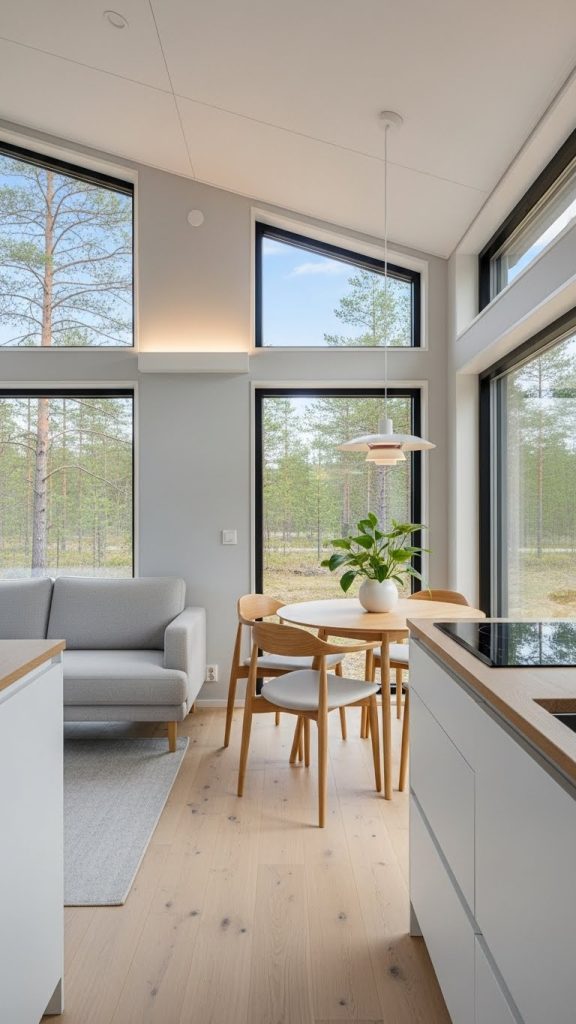
One of the most effective ways to make a tiny house feel larger is by implementing an open floor plan. Eliminating unnecessary walls allows light to flow freely and creates the illusion of more space. A combined living, dining, and kitchen area can make a tiny home feel airy and comfortable. Consider multi-functional furniture like foldable tables, extendable countertops, or modular sofas to maintain flexibility within the open space.
Key Tips:
- Use light colors on walls and floors to enhance the feeling of openness.
- Opt for transparent or minimalistic furniture that does not block the view.
- Keep pathways clear to create a sense of flow throughout the home.
2. Smart Storage Solutions
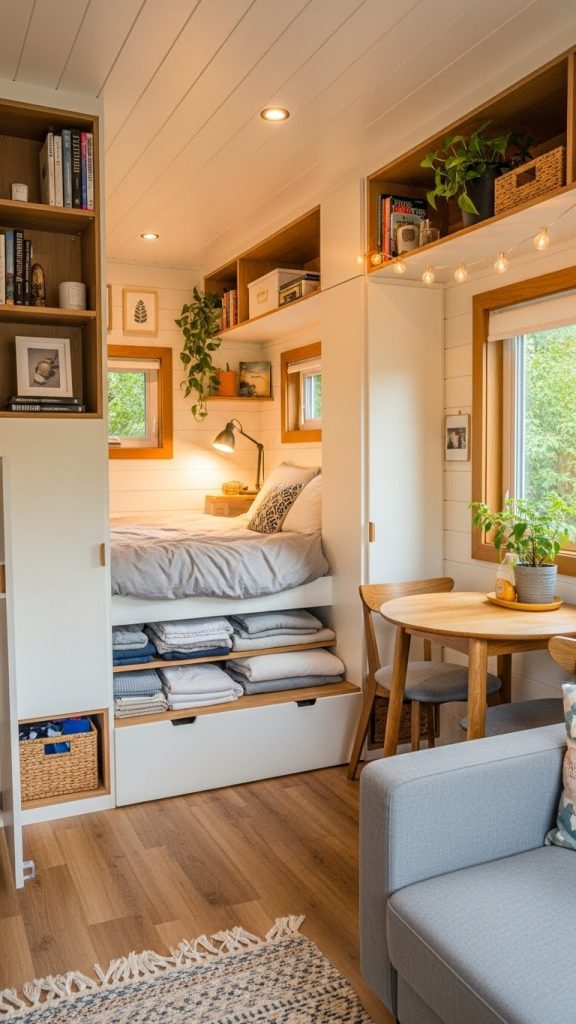
Storage is a critical aspect of tiny house design. Without adequate storage, a small space can quickly become cluttered and chaotic. Clever storage solutions can help you maximize every square foot without sacrificing aesthetics. Think built-in shelves, under-bed storage, vertical cabinets, and hidden compartments. For example, staircases can double as drawers, or benches can store blankets, books, or kitchen essentials.
Key Tips:
- Utilize vertical space with tall shelves and hanging storage.
- Consider furniture with hidden storage compartments.
- Use baskets or boxes to organize small items efficiently.
3. Lofted Sleeping Areas
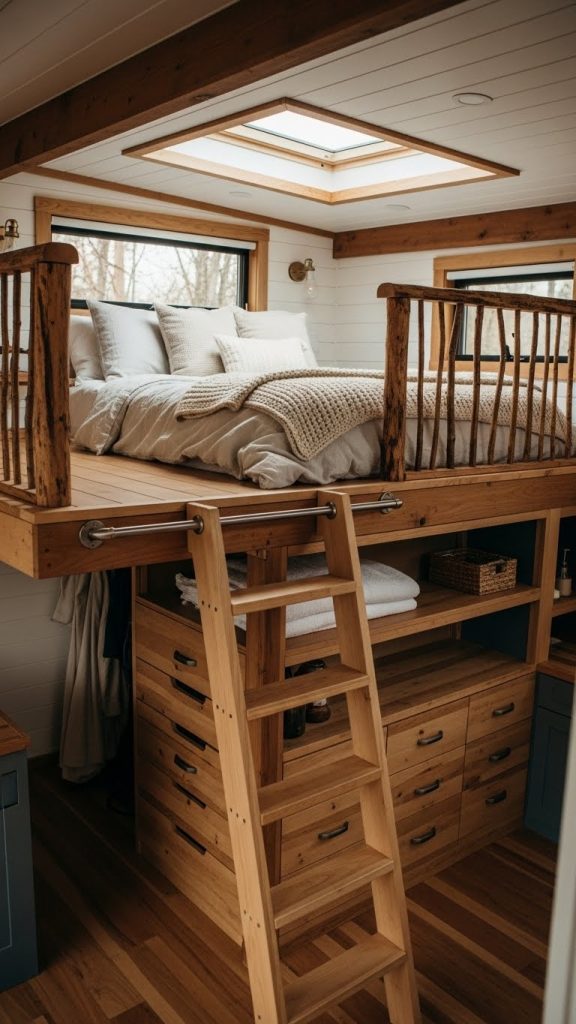
Lofts are an excellent way to save space in a tiny house. By elevating the bed, you can free up the floor area for other functions, such as a workspace, living room, or dining area. Lofted sleeping areas can also create a cozy and private retreat. Safety is essential, so ensure the loft has a secure railing and sturdy ladder or staircase.
Key Tips:
- Use a low-profile mattress to avoid a cramped feeling.
- Add storage underneath the loft for books, clothing, or kitchen items.
- Consider installing a skylight above the loft to enhance natural lighting.
4. Minimalist Furniture Choices
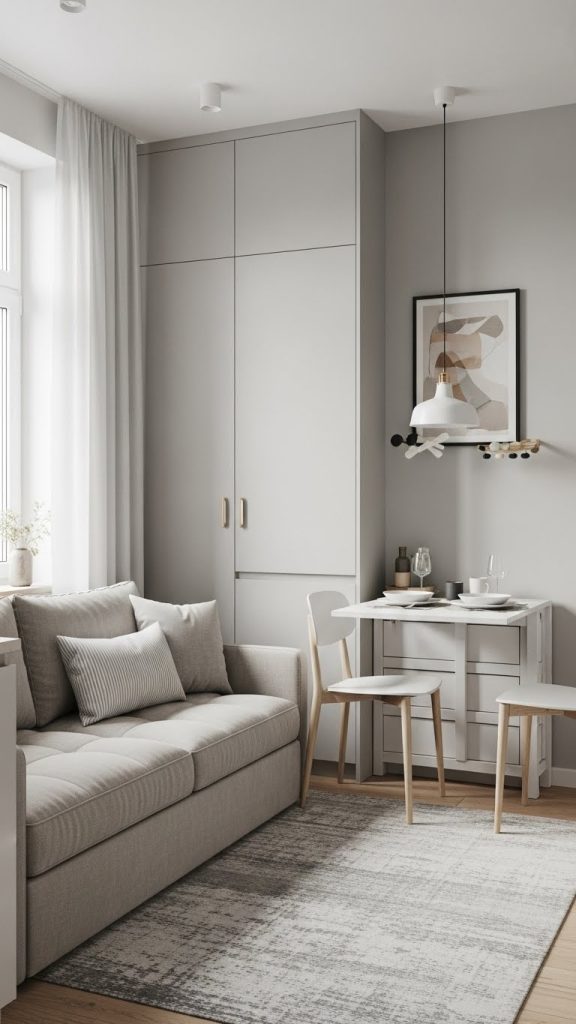
In tiny houses, less is more. Minimalist furniture helps maintain a clean and uncluttered environment while offering the necessary comfort and functionality. Opt for pieces with simple lines, neutral colors, and multi-purpose functions. A sofa that converts into a bed or a foldable dining table can save significant space while maintaining style.
Key Tips:
- Select lightweight furniture for easy movement.
- Stick to a neutral color palette to create a cohesive look.
- Avoid bulky pieces that overwhelm the small space.
5. Use of Mirrors and Reflective Surfaces
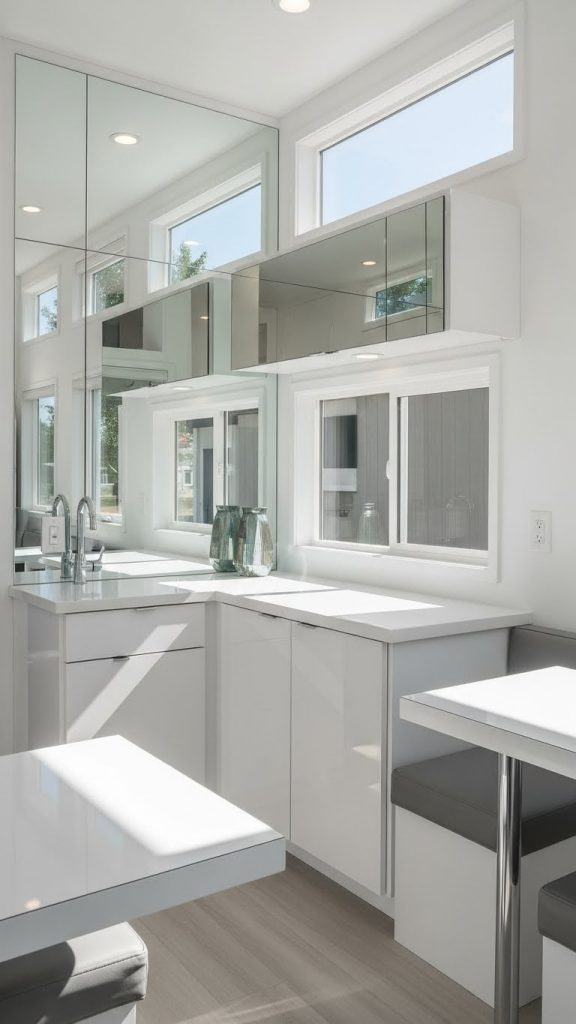
Mirrors and reflective surfaces can make a tiny home appear larger than it is. By reflecting light and views, mirrors create an illusion of depth and openness. Strategically placing mirrors opposite windows maximizes natural light and brightens the entire space. Glossy finishes on cabinets, tables, or walls can also contribute to a sense of spaciousness.
Key Tips:
- Hang a large mirror in the living area to make the space feel expansive.
- Use mirrored cabinet doors in the kitchen or bathroom.
- Incorporate metallic or glass surfaces to reflect light naturally.
6. Light Colors and Natural Materials
Color plays a significant role in tiny house design. Light colors, such as whites, creams, soft grays, and pastels, can make a room feel larger and more open. Natural materials, including wood, stone, and bamboo, bring warmth and texture to a compact space. Combining light colors with natural elements creates a balanced, inviting, and aesthetically pleasing environment.
Key Tips:
- Use light-colored flooring to extend the sense of space.
- Incorporate wooden accents in furniture or wall panels for a cozy feel.
- Avoid dark or overly vibrant colors that can make the room feel cramped.
7. Multi-Functional Spaces
In tiny houses, every square foot counts. Creating multi-functional spaces is essential to maximizing usability. A kitchen island can double as a dining table, a desk can serve as a vanity, or a Murphy bed can transform a bedroom into a living area during the day. Flexible layouts allow residents to adapt the space according to their needs.
Key Tips:
- Invest in furniture that serves more than one purpose.
- Think vertically and use wall-mounted desks or foldable tables.
- Plan areas that can easily transition between work, dining, and relaxation.
8. Creative Lighting Solutions
Lighting has the power to transform a tiny space. Natural light can make the space feel airy, while well-placed artificial lighting can enhance the ambiance and functionality. Consider a combination of ceiling lights, wall sconces, under-cabinet lighting, and floor lamps. Smart lighting solutions with adjustable brightness can also create mood variations while conserving energy.
Key Tips:
- Use large windows and skylights to maximize natural light.
- Add task lighting in the kitchen, bathroom, and workspace.
- Incorporate LED strips or hidden lights to save space and improve aesthetics.
9. Personalized Decor and Greenery
Decorating a tiny house with personal touches adds character and warmth. Since the space is limited, choose decor items that reflect your personality without cluttering the room. Minimal wall art, small sculptures, and curated photo frames can create a cozy and inviting environment. Adding indoor plants enhances air quality and brings a touch of nature indoors.
Key Tips:
- Use wall-mounted or hanging decor to save floor space.
- Select compact, easy-to-maintain plants like succulents or ferns.
- Rotate decor items seasonally to keep the space fresh and interesting.
10. Efficient Kitchen and Bathroom Design
Kitchens and bathrooms in tiny houses require careful planning to optimize functionality. Compact appliances, smart storage solutions, and space-saving fixtures can make these areas practical and stylish. Consider a two-burner stove, a small refrigerator, and a sink with integrated cutting boards in the kitchen. For bathrooms, a corner shower, wall-mounted toilet, and storage niches can save space without sacrificing comfort.
Key Tips:
- Use open shelving or wall-mounted cabinets for kitchen storage.
- Install sliding doors or pocket doors for bathrooms to save space.
- Opt for foldable or collapsible countertops to increase workspace when needed.
Conclusion
Designing a tiny house interior is a challenge that requires creativity, planning, and smart decision-making. By focusing on open floor plans, multi-functional furniture, clever storage solutions, and thoughtful decor, you can create a home that is both stylish and functional. Whether it’s using lofted sleeping areas, mirrors, light colors, or personalized touches, each design choice contributes to a sense of comfort and spaciousness.
Living in a tiny house is not just about minimizing space; it is about maximizing life. With these ten interior design ideas, you can make your tiny home feel expansive, cozy, and uniquely yours. Tiny house living offers a chance to embrace simplicity without compromising on style, proving that big ideas can come in small packages.
Author

admin@weltpromi.de
Related Posts
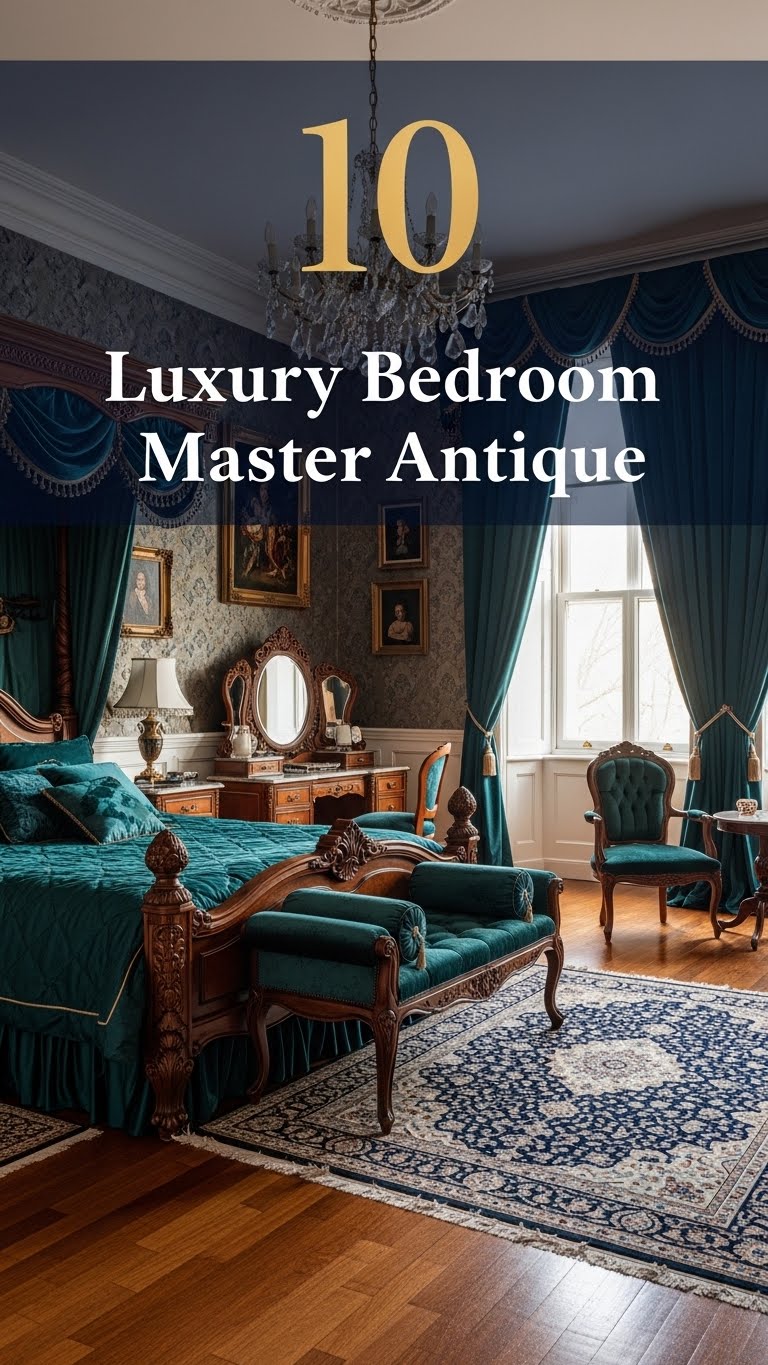
10 Luxury Bedroom Master Antique
Creating a luxurious master bedroom is all about blending comfort, elegance, and timeless design. When you add antique elements into the mix,...
Read out all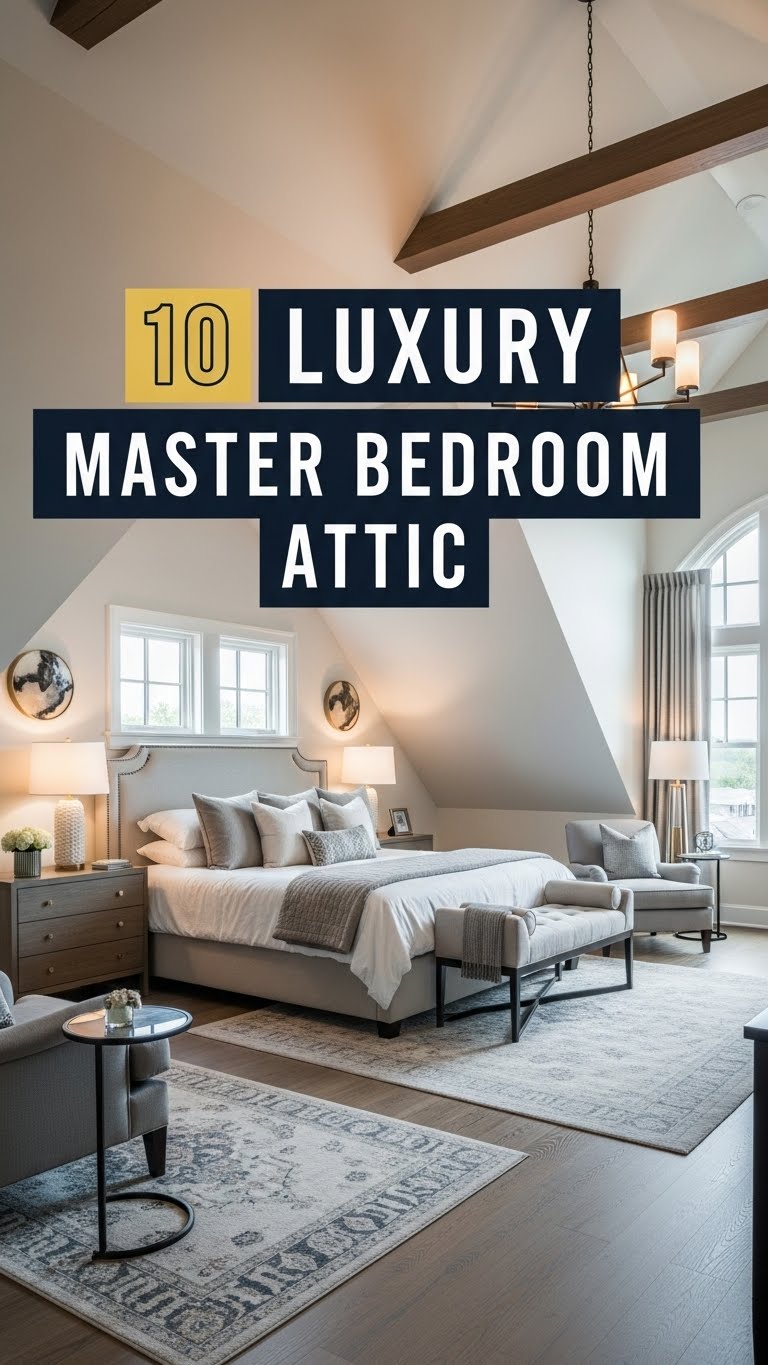
10 Luxury Master Bedroom Attic
Turning an attic into a luxurious master bedroom is an excellent way to maximize your home’s potential. Attics often come with unique...
Read out all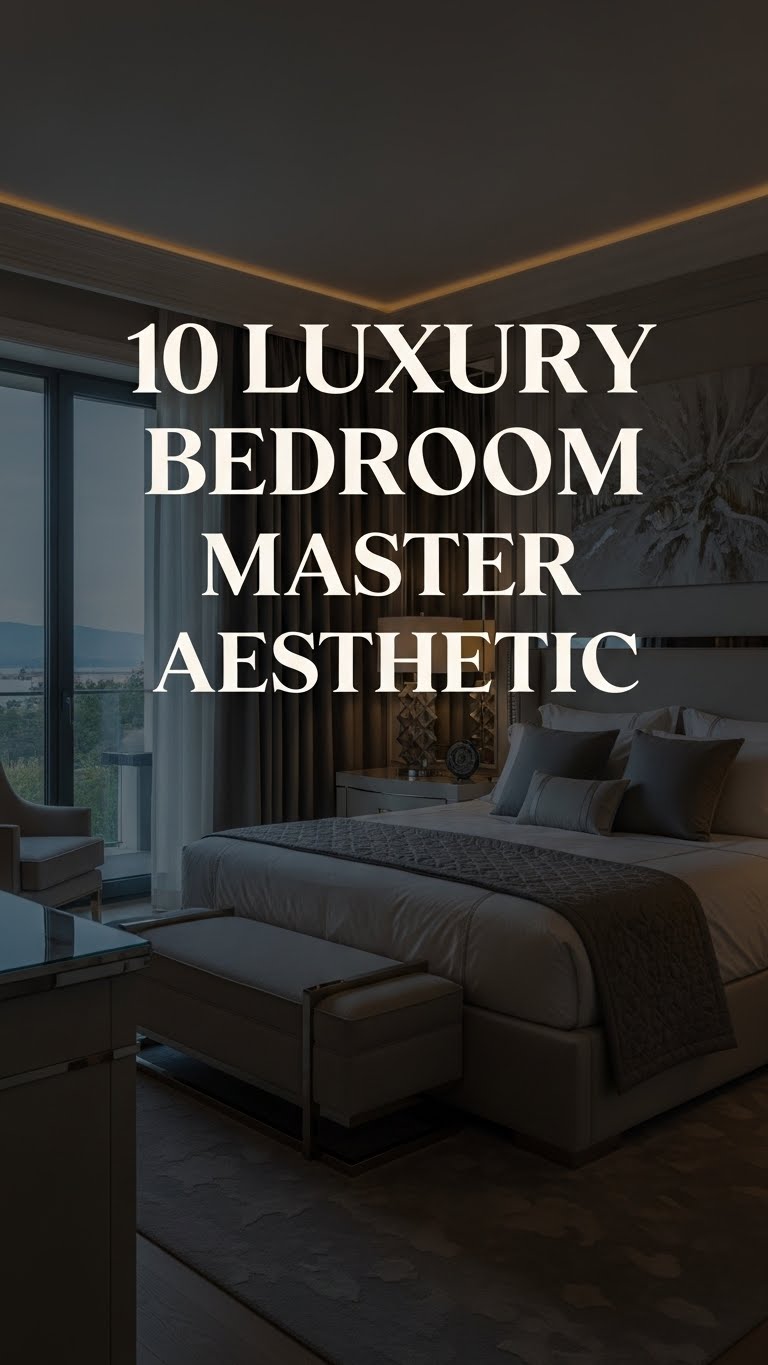
10 Luxury Bedroom Master Aesthetic
Creating a luxurious master bedroom is about more than just choosing expensive furniture. It is about crafting a space that embodies comfort,...
Read out all
10 Bedroom Bed Designs
Your bedroom is more than just a place to sleep—it’s a sanctuary, a personal retreat where style and comfort meet. Central to...
Read out all
10 Beige Bedroom Ideas
When it comes to bedroom design, beige is a timeless and versatile color that exudes warmth, sophistication, and calm. Unlike brighter colors...
Read out all
10 Cool Bedroom Ideas
Your bedroom is more than just a place to sleep. It is your sanctuary, your personal retreat, and a reflection of your...
Read out all